Sunwayfoto T4030CMI Review
The Ultimate Heavy-Duty Inverted Tripod for Astrophotography
1. Introduction
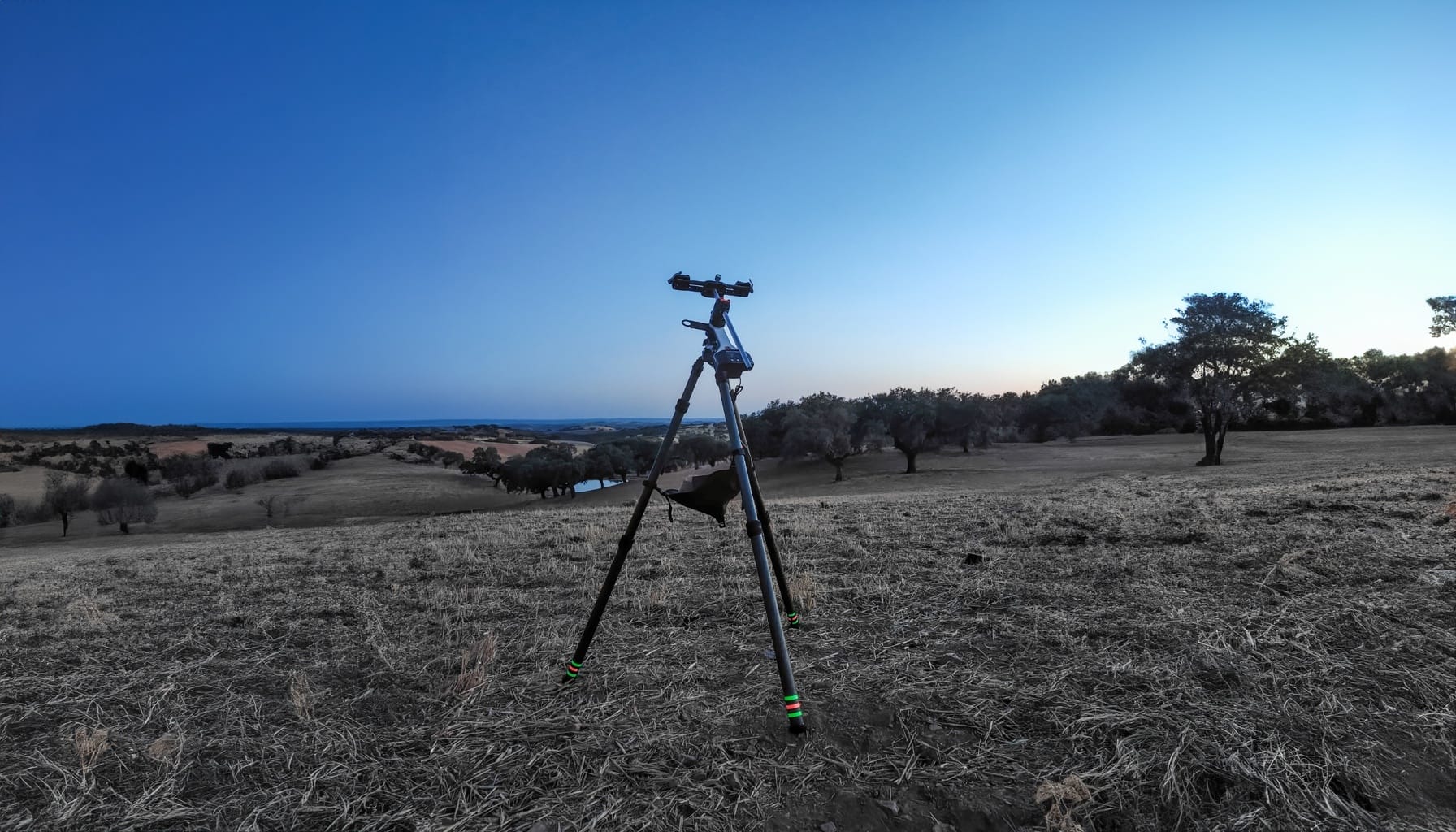
Recently, I had the opportunity to thoroughly test the Sunwayfoto T4030CMI tripod during several intensive night photography sessions, and it has completely transformed my astrophotography workflow. This heavy-duty carbon fiber tripod features an innovative inverted leg design that provides the rock-solid stability essential for night sky photography. When you’re dealing with star trackers, heavy camera setups, and exposures lasting minutes or even hours, stability isn’t just important – it’s absolutely critical. The T4030CMI’s massive 66 lb (30 kg) load capacity means I can mount my full astrophotography rig including camera, tracker, guidescope, and counterweights without any concerns about flexing or vibration compromising my images.
2. Technical Specifications
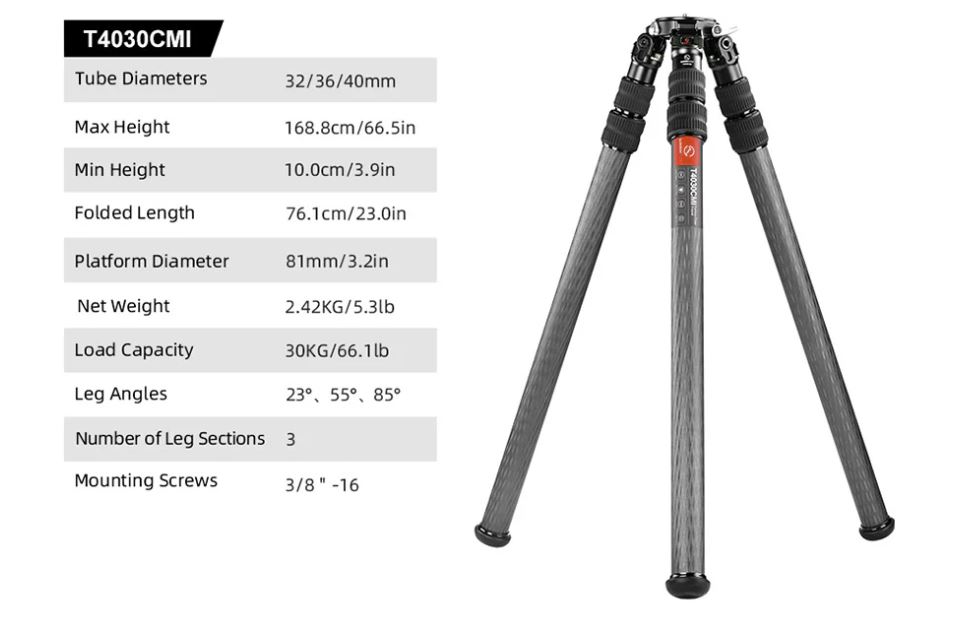
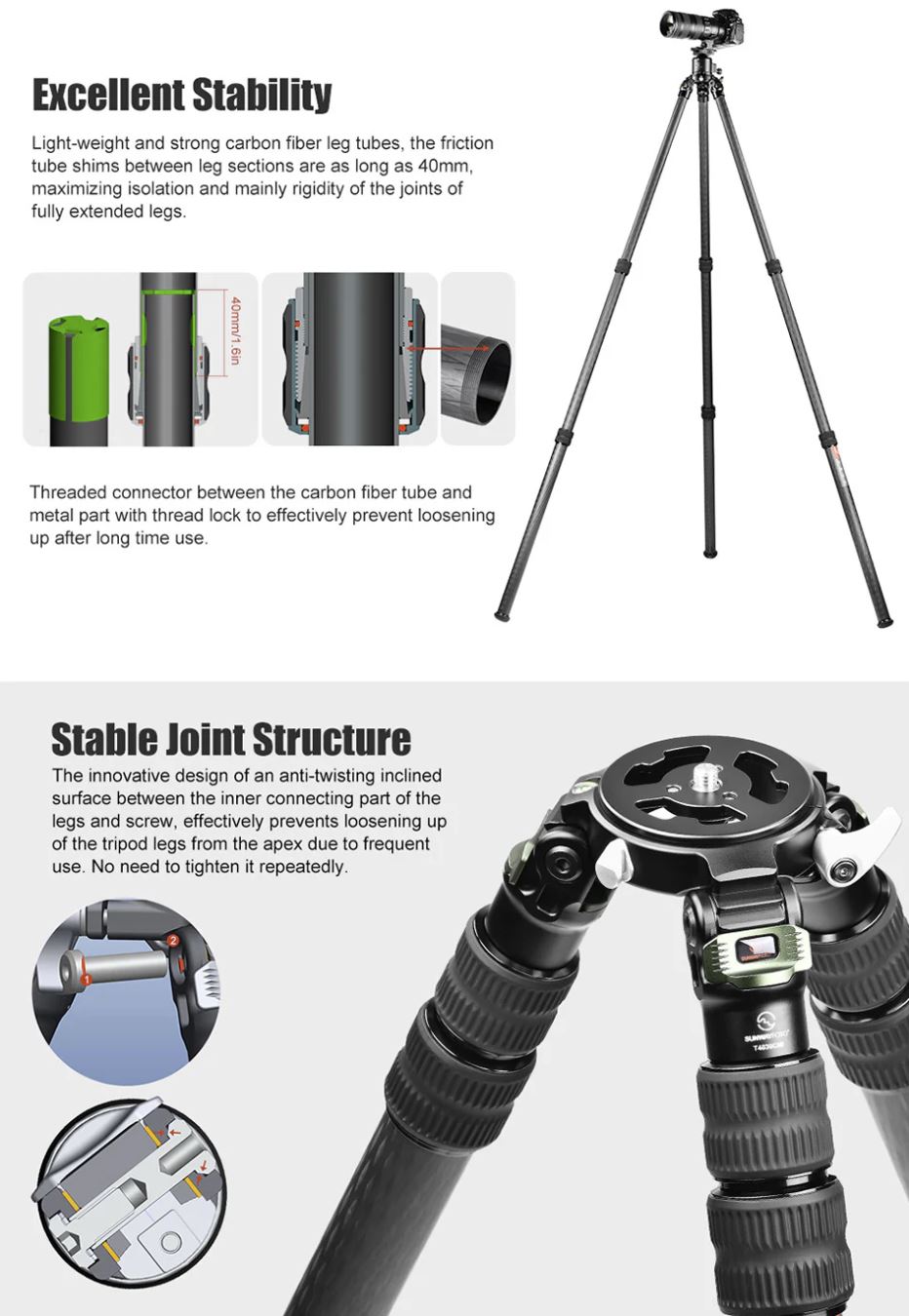
- Materials: Premium 10-layer carbon fiber tubes with T6061 aluminum components, engineered for maximum strength-to-weight ratio.
- Load Capacity: An impressive 66 lb (30 kg) maximum load capacity, making it suitable for the heaviest camera and lens combinations.
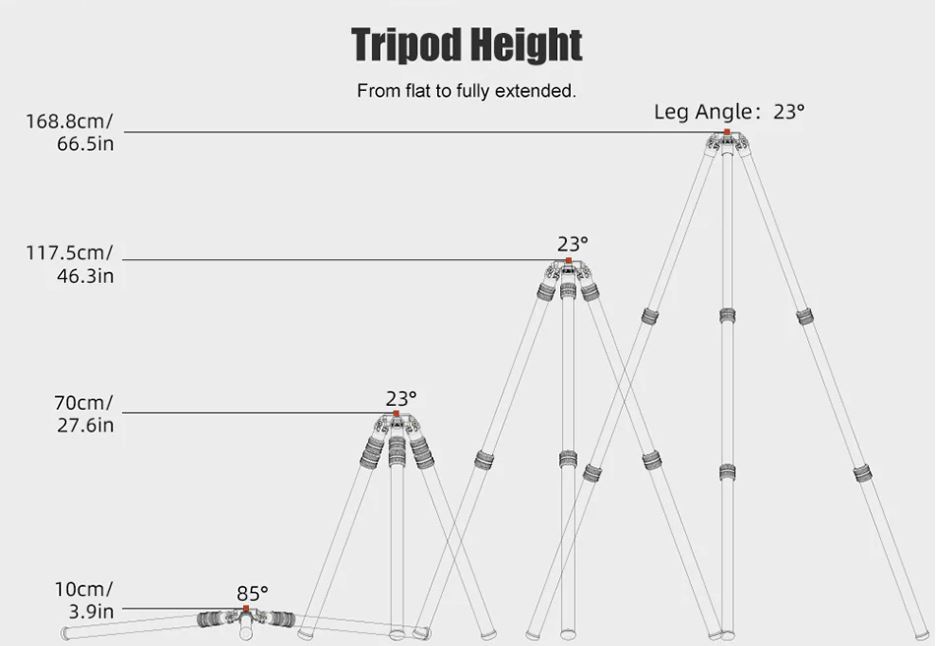
- Height Range: Versatile height adjustment from 3.9 inches (10 cm) minimum to 67 inches (168.8 cm) maximum, perfect for prone, kneeling, and standing positions.
- Structure: 3-section inverted legs with progressive tube diameters of 32mm, 36mm, and 40mm – with the thickest tubes at the bottom for superior stability.
- Leg Angles: Three preset leg angles at 23°, 55°, and 85° for maximum versatility.
- Weight: Approximately 4.85 lb (2.2 kg) – remarkably light for its load capacity.
- Folded Length: Compact 26.4 inches (67 cm) for easy transport.
- Mounting: Standard 3/8″ threaded mounting stud compatible with all ball heads and trackers.
3. The Inverted Leg Design: Perfect for Astrophotography
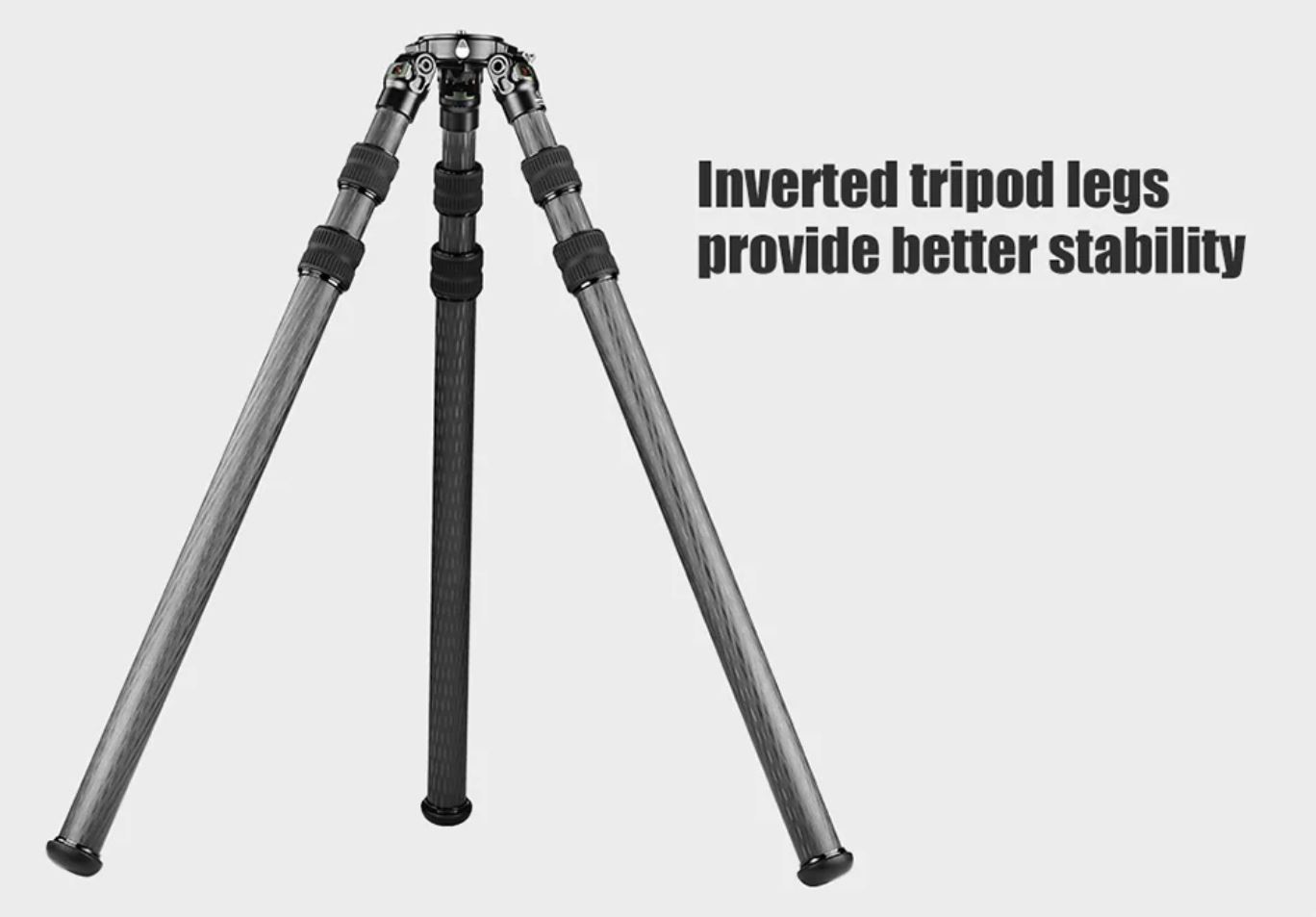
The standout feature of the T4030CMI is its inverted leg design, which places the thickest tube sections at the bottom rather than at the top like traditional tripods. For night photography with tracking systems, this innovative approach provides several game-changing advantages:
- Unmatched Stability for Trackers: With the heaviest and thickest tubes at ground level (40mm diameter), the center of gravity is dramatically lowered. This is crucial when mounting a star tracker on top – the entire system remains incredibly stable even as the tracker rotates and shifts weight during long exposures.
- Vibration Dampening: The progressive diameter increase toward the ground (32mm → 36mm → 40mm) creates exceptional rigidity that dampens vibrations. When imaging at 200-400mm focal lengths with a tracker, even the slightest vibration can ruin hours of work. The T4030CMI eliminates this concern.
- Wind Resistance: Night photography often means shooting in exposed locations with wind. The low center of gravity and wide stance capability make this tripod remarkably stable even in breezy conditions that would compromise lighter tripods.
- Quick Setup in Darkness: The inverted design means the legs naturally want to extend due to gravity acting on the heavier lower sections. This automatic deployment is a blessing when setting up in complete darkness – less fumbling, faster setup, more time imaging.
- No Flex Under Load: Traditional tripods can flex when supporting heavy loads at the top, causing the dreaded “walking” effect during tracked exposures. The T4030CMI’s inverted design and massive tubes eliminate this completely.
4. Night Photography Setup: Tracking Systems and Heavy Loads
During my testing sessions, I regularly mounted the following equipment on the T4030CMI, and it handled everything with ease:
My Astrophotography Setup
- Equatorial Wedge: For precise polar alignment (approximately 1.5 lbs)
- Star Tracker: Fornax Lightrack II
- Camera Body: Sony Alpha Full Frame
- Telephoto Lens: Sony 200-600mm G
- Counterweights: To achieve a perfect balance
- Total System Weight: Approximately 20 lbs (9 kg)
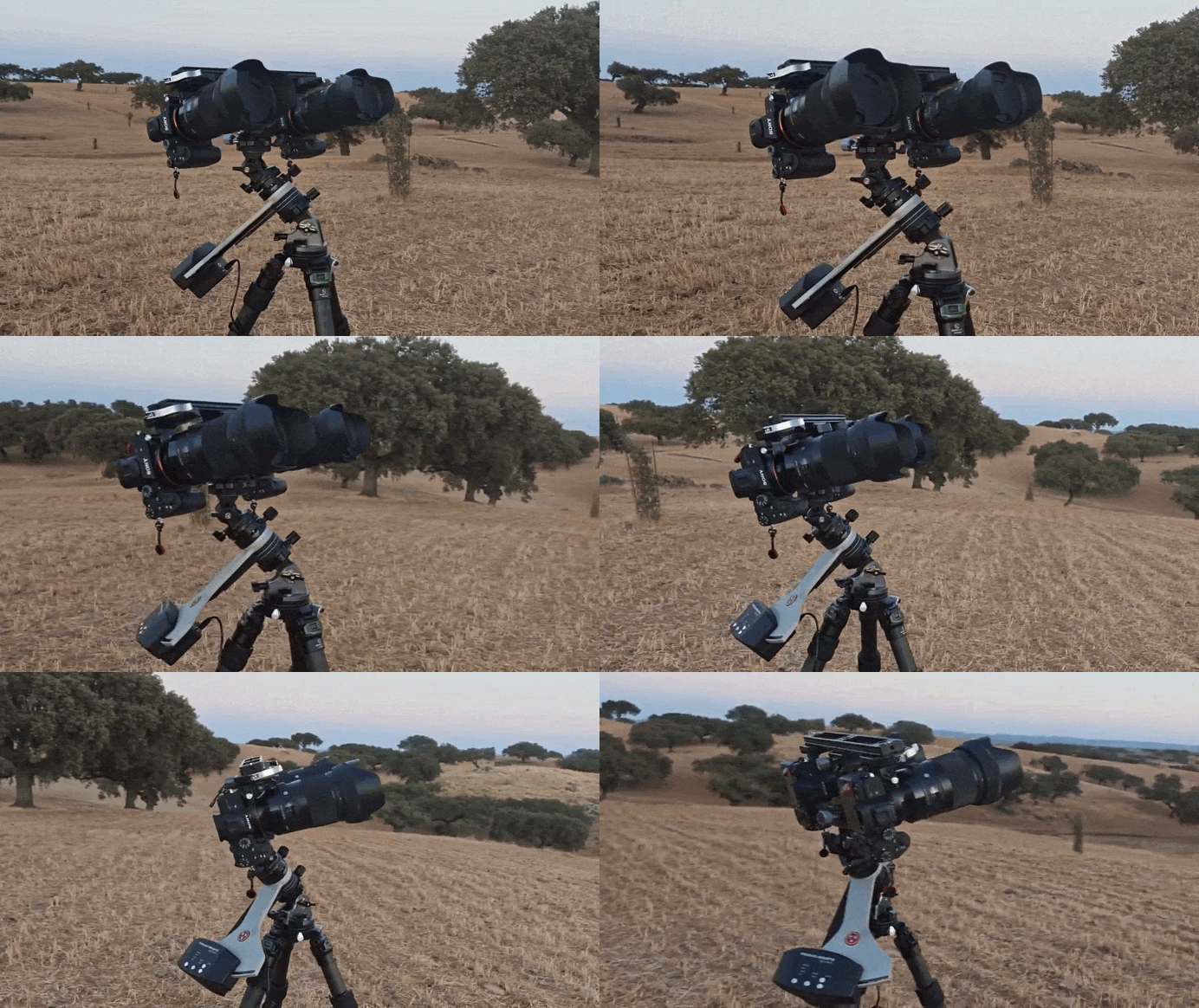
My Dual Camera RGB/Ha System
The setup I use most frequently is a dual camera system specifically developed for capturing RGB and Halpha data simultaneously. This is where the T4030CMI’s massive load capacity truly shines:
- Cameras: Two identical Sony Alpha full frame cameras – one for RGB and one for Ha
- Lenses and Filters: Two wide to mid-range photo lenses with narrowband filters
- Mounting System: Fornax Lightrack II with dual camera mounting brackets
- Complete System Weight: 10-12 kg (20-25 lbs) fully mounted and balanced (when using counterweights)
Even with this substantial dual-camera load weighing up to 10 kg, the T4030CMI never showed the slightest hint of flex or instability. The 66 lb (30 kg) capacity means I’m using only about 30-35% of the tripod’s maximum capacity, providing an enormous safety margin. This is crucial when you’re running an expensive dual-camera system worth several thousand euros – you need absolute confidence in your support system.
Why This Heavy Load Matters
A dual camera RGB/Ha system is one of the most demanding setups in amateur astrophotography. You’re essentially doubling the weight, doubling the moment arms, and creating a complex balancing challenge. Lesser tripods will flex, vibrate, or slowly “walk” as the tracker rotates throughout the night. The T4030CMI’s inverted leg design with 40mm base tubes provides the rigidity needed to keep both cameras perfectly stable during long exposures, even with wide to telephoto focal lengths.
Direct Mounting: Simple and Effective
The T4030CMI features a standard 3/8″ threaded mounting stud at the top, which is perfect for astrophotography:
- Universal Compatibility: Works with any equatorial wedge, ball head, or panning base that uses standard 3/8″ threads – which is virtually all professional equipment.
- Solid Connection: The 3/8″ stud provides a secure, vibration-free connection for your wedge and tracker setup.
- Simple Setup: No need for adapters or special mounting systems – just thread your equatorial wedge onto the tripod and you’re ready to go.
- Load Distribution: The massive 40mm leg tubes and reinforced apex distribute the load effectively, even with my 10 kg dual-camera tracking setup.
5. Real-World Astrophotography Performance
The true test of any astrophotography tripod comes from real-world imaging projects that span multiple nights and accumulate dozens of hours of exposure time. Here’s how the T4030CMI performed during my most demanding project:
Dual Camera RGB/Ha System – Scorpius Region
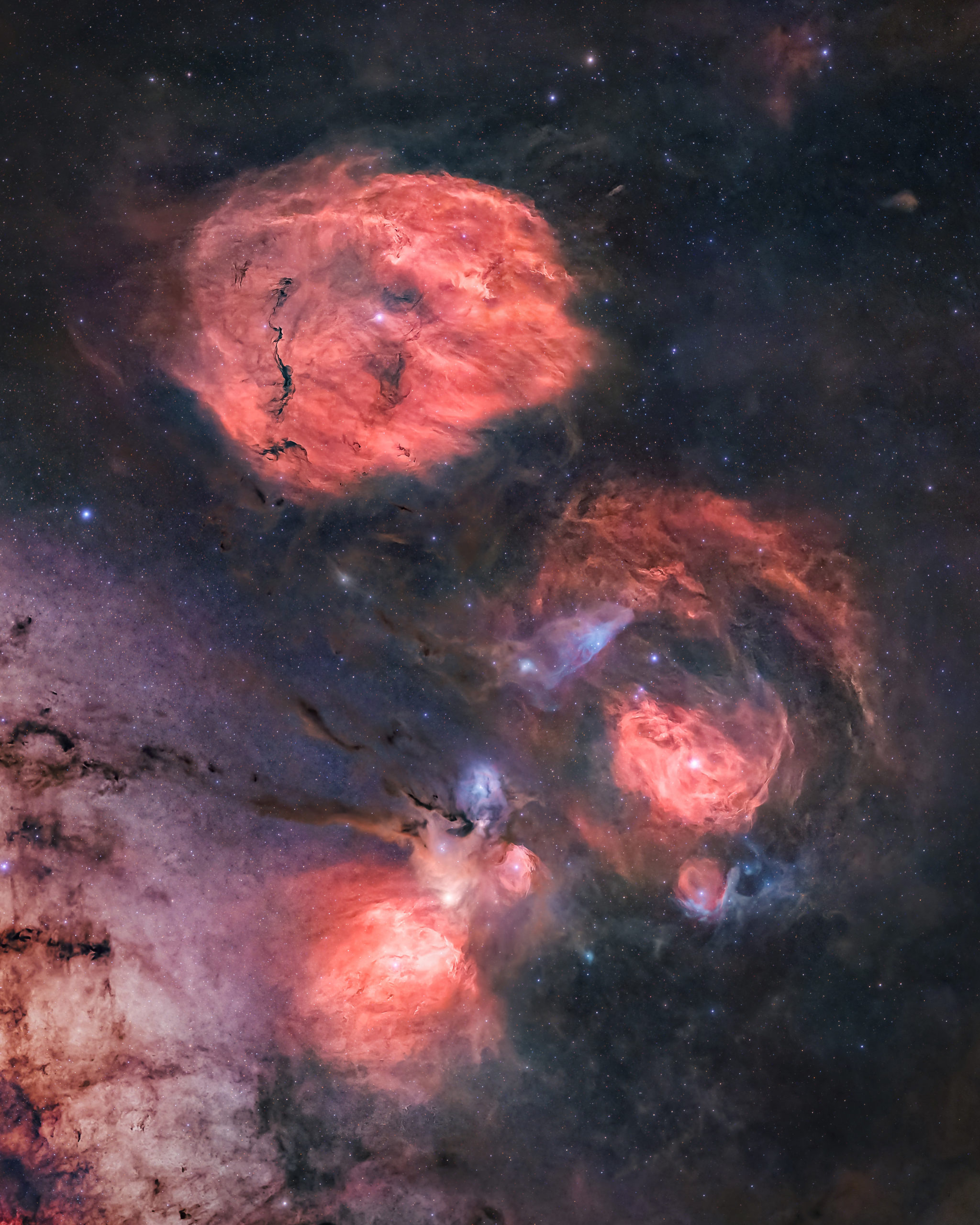
Project Overview: A multi-night narrowband imaging project capturing the rich nebulosity in the Scorpius constellation region using my complete dual camera setup.
Equipment: Fornax Lightrack II with two identical Sony Alpha full frame cameras, wide to mid-range lenses, Ha and OIII narrowband filters, complete counterweight system – total weight approximately 9.5 kg.
Total Integration Time:
- More than 10 hours of Hydrogen Alpha (Ha)
- Around 5 hours of Oxygen III (OIII)
- Only 1.5 hours of RGB due to bad weather
Conditions: Multiple nights across several weeks with varying conditions including low temperatures down to 2°C, moderate winds up to 25 km/h, and high humidity causing significant dew formation. Imaging sessions lasted 4-6 hours per night.
Exposure Times: Individual exposures of more than 10 minutes per frame with the dual camera system running simultaneously – one of the most demanding scenarios possible for tripod stability.
Results: The T4030CMI performed flawlessly throughout the entire project. Despite the challenging conditions with low temperatures, moderate winds, and a 10 kg load, the tripod provided rock-solid stability for every single 10+ minute exposure. Zero movement, zero settling, zero vibration across hundreds of frames. The inverted leg design proved its worth in windy conditions – the low center of gravity kept the heavy dual-camera system completely stable when lighter tripods would have struggled. Even after 6-hour imaging sessions in cold, humid conditions, all leg locks continued to operate smoothly with no stiffness or issues.
This project represents exactly the kind of demanding astrophotography work where tripod quality makes the difference between success and failure. When you’re accumulating 15+ hours of total exposure time across multiple filters, every frame must be perfectly sharp – and the T4030CMI delivered without compromise.
6. Portability for Night Photography Expeditions
Despite being classified as a heavy-duty tripod, the T4030CMI maintains impressive portability – crucial when hiking to dark sky locations before sunset.
- Weight and Dimensions: At 4.85 lb (2.2 kg) and folding down to 26.4 inches (67 cm), it’s surprisingly portable for a tripod with such enormous load capacity. When you factor in that this one tripod can replace both a lightweight tripod AND a heavier one for tracked imaging, the weight actually represents a net savings.
- Backpack Friendly: The 26.4″ folded length fits easily in or alongside most photography backpacks. I typically strap it to the side of my pack alongside my tracker case.
- Premium Carbon Fiber: The 10-layer carbon fiber construction provides exceptional strength while keeping weight manageable for hikes to dark locations. It’s also more comfortable to carry in cold weather compared to aluminum.
- Robust Leg Locks: Large, textured twist locks provide secure, reliable operation even with gloves on during cold winter night sessions. This is a huge advantage when working in freezing temperatures.
- Professional Anodization: All aluminum components feature hard anodized finish for maximum corrosion and wear resistance – important for damp night conditions and dew.
7. Critical Stability Features for Tracked Imaging
The T4030CMI’s stability is nothing short of exceptional for astrophotography. When shooting tracked exposures of 2-5 minutes with telephoto lenses, stability isn’t just nice to have – it’s the difference between sharp, detailed images and blurry failures.
- 66 lb Load Capacity: This massive capacity means your tracking setup operates well within the tripod’s limits. Most astrophotography rigs weigh 10-20 lbs, so you’re using only 15-30% of capacity. This enormous safety margin eliminates any possibility of flex or instability.
- Zero Flex During Tracking: As your star tracker rotates throughout the night, weight distribution changes constantly. Lesser tripods will flex slightly, causing the dreaded “walking” effect where your framing slowly shifts. The T4030CMI’s rigid construction completely eliminates this issue.
- Low Center of Gravity: The inverted leg design creates an inherently stable platform with the weight concentrated at the base. This is crucial for tall tracking setups where the camera can be 12-18 inches above the tripod mounting point.
- Wide Stance Capability: The 85° leg angle allows for an extremely wide, stable stance – perfect for uneven terrain at dark sky sites or when shooting at low angles toward the horizon.
- Reinforced Connections: All leg joints and connections are engineered with extra material for maximum strength and longevity. After dozens of night sessions with heavy loads, there’s zero looseness or play in any joint.
- Vibration Dampening: The carbon fiber construction naturally dampens vibrations. When focusing or making adjustments to your tracker, the system settles back to stability within 1-2 seconds rather than the 5-10 seconds common with lesser tripods.
8. Height Versatility for Different Astrophotography Scenarios
One of the T4030CMI’s greatest strengths for night photography is its ability to adapt to any shooting scenario and target in the sky and its incredible height.
- Low Horizon Targets (10″ – 30″): When imaging objects near the horizon like rising constellations or the Milky Way core just after it rises, the ability to go as low as 3.9 inches is invaluable. I can position my tracker and camera to shoot objects at 10-20° above the horizon without obstruction.
- Mid-Sky Imaging (30″ – 50″): This is the sweet spot for most astrophotography work. Objects in the 40-60° elevation range are at optimal height with minimal atmospheric interference. The tripod is rock-solid at these mid-range heights.
- Zenith Shooting (50″ – 67″): Full extension to 67 inches allows comfortable shooting of objects directly overhead or at high elevations. This is particularly useful when imaging deep sky objects that pass through the zenith, or when you need to point straight up for polar alignment.
- Three Leg Angles for Any Terrain: Dark sky sites rarely have perfectly flat ground. The preset angles (23°, 55°, 85°) click into place securely and let you adapt to rocky terrain, hillsides, or uneven ground while maintaining a level platform for your tracker.
- Height Adjustment Without Center Column: The 3-section legs provide all the height adjustment you need without a center column. This is actually ideal for tracking – center columns can introduce flex and vibration. The T4030CMI’s design keeps everything rigid.
9. Mounting Options
Since the T4030CMI uses a standard 3/8″ mounting stud, you have flexibility in how you mount your star tracker. The choice depends on your specific imaging needs and whether you require precise polar alignment.
Option 1: Ball Head (Simple Setup)
For basic tracking or when precise polar alignment isn’t critical, a quality ball head works well:
- High Load Capacity: Look for ball heads rated for at least 30-40 lbs to handle your tracker setup with plenty of safety margin.
- Smooth Movement: The ball should move smoothly without stick-slip for easy framing adjustments.
- Secure Locking: Once locked, there should be absolutely zero movement or creep.
- Arca-Swiss Compatibility: Allows you to easily attach and remove your tracker with quick-release plates.
Recommended Ball Heads: Sunwayfoto XB-52 or XB-64
Option 2: Equatorial Wedge (Precise Polar Alignment)
For serious deep sky imaging requiring accurate tracking over long exposures, an equatorial wedge is essential. The wedge allows you to tilt your star tracker to match your latitude, enabling precise polar alignment – critical for multi-minute exposures without field rotation.
Advantages of Equatorial Wedges:
- Precise Polar Alignment: Adjustable altitude (latitude) and azimuth angles for perfect polar alignment
- No Field Rotation: Eliminates field rotation during long tracked exposures, essential for sharp stars in the corners
- Repeatability: Once aligned, you can return to the same setup night after night with minimal adjustment
- Professional Results: Necessary for exposures longer than 2-3 minutes and focal lengths above 200mm
- Dual Camera Support: Provides stable platform for heavy dual-camera RGB/Ha systems
My Setup
I use an Equatorial Wedge mounted directly on the T4030CMI for precise alignment of the Fornax Lightrack II. This combination is essential for my dual camera RGB/Ha system work, where I’m shooting 10+ minute exposures with narrowband filters. The wedge allows me to achieve accurate polar alignment, which is absolutely critical when capturing hours of data across multiple nights – any tracking error or field rotation would ruin the entire dataset.
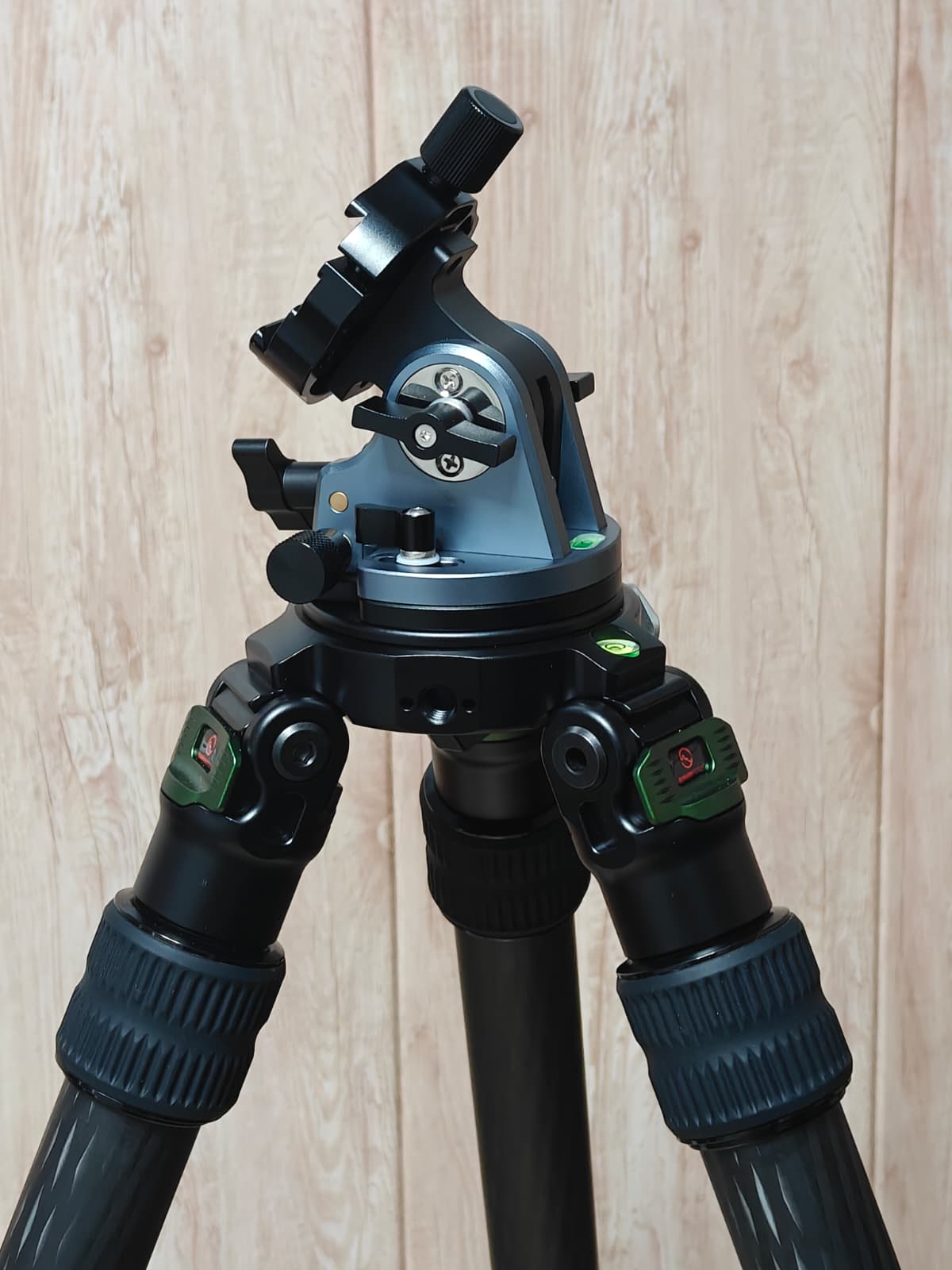
The equatorial wedge paired with the T4030CMI’s rock-solid stability provides the foundation for professional-level astrophotography. I can achieve polar alignment accuracy, which translates to perfectly round stars even in 10-minute exposures across the entire frame. This level of precision simply isn’t possible with a ball head alone.
Total cost for tripod + equatorial wedge is around $650-800 depending on which wedge you choose, which is still excellent value compared to premium systematic tripod systems costing $1,500+.
10. Included Accessories
The T4030CMI comes with accessories specifically useful for night photography in varied terrain:
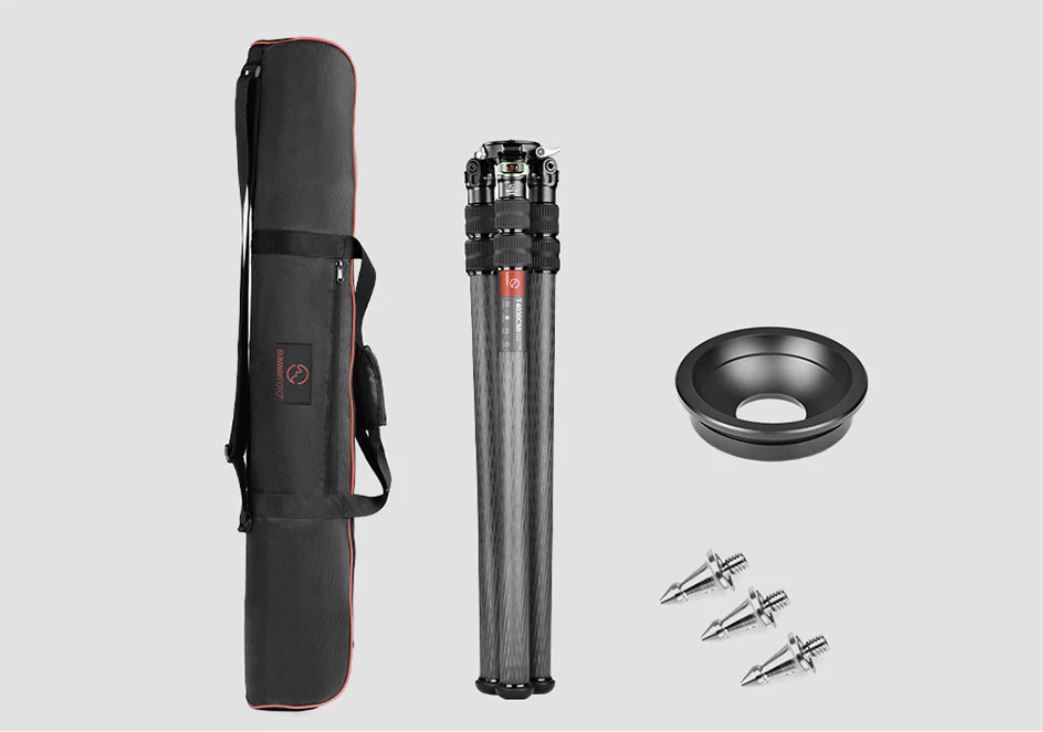
- Stainless Steel Spikes: Three heavy-duty stainless steel spikes included for superior grip on soft ground, grass, dirt, or sand – perfect for dark sky sites that often have natural ground surfaces. These screw into the leg feet in seconds.
- Rubber Feet: Standard rubber feet for hard surfaces, rock, or concrete – useful when shooting from parking areas or paved locations. Simply unscrew the spikes to use the rubber feet.
- Carrying Bag: Professional padded carrying bag included for protection during transport to remote locations. The bag has shoulder strap for easier carrying when hiking to dark sky sites.
- Multiple 1/4″ Accessory Mounts: Mounting points on the legs allow you to attach a red LED headlamp, dew heater controller, or other accessories you need at hand during night sessions.
- Hex Keys: Included for any maintenance or adjustments needed in the field.
Additional Accessories I Recommend for Astrophotography
- Counterweight Bag: Hang from the hook under the base for extra stability in windy conditions
11. Durability and Weather Resistance for Night Sessions
The T4030CMI is built to withstand the unique challenges of night photography, where you’re often dealing with dew, temperature swings, and extended exposure to the elements.
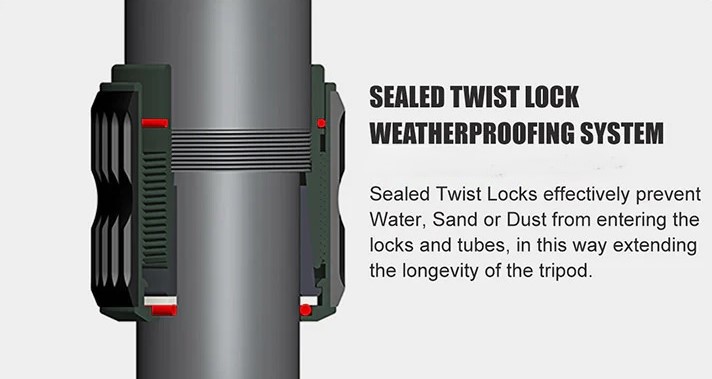
- Sealed Leg Locks: The twist locks feature internal seals to keep out dust, dirt, sand, and critically for night photography – dew and moisture that forms as temperatures drop after sunset.
- Corrosion Resistant: Hard anodized aluminum components resist corrosion even in humid night conditions. After dozens of dewy night sessions, there’s zero corrosion on any component.
- Temperature Tolerance: Carbon fiber construction performs consistently across extreme temperature ranges. Unlike aluminum tripods that become painfully cold to touch in winter night sessions, carbon fiber remains comfortable to handle even in freezing conditions.
- Dew Formation Resistance: Carbon fiber doesn’t form condensation as readily as metal, so less dew accumulates on the legs during cold, humid nights. This also means less dripping onto your equipment below.
- UV Resistant: The carbon fiber and finishes are UV-stabilized to prevent degradation. While this matters more for daytime use, it’s important for the inevitable daytime scouting and setup at dark sky locations.
- No Thermal Expansion Issues: Carbon fiber has minimal thermal expansion compared to aluminum. This means your carefully leveled tracker stays level throughout the night as temperatures drop 10-20°C from sunset to pre-dawn.
After Months of Night Use
After dozens of night photography sessions in conditions ranging from dry desert nights to humid coastal locations, with temperatures from 0°C to 25°C, the T4030CMI shows zero degradation. The leg locks still operate smoothly, there’s no play in any joints, and all finishes remain pristine. This is a tripod built for long-term professional use.
12. Astrophotography Applications: What You Can Image
The T4030CMI excels across the entire spectrum of night photography applications. Here’s what you can successfully image with this tripod and a quality star tracker:
Wide-Field Milky Way with Tracking (14-50mm)
Mount a tracker with a wide-angle to standard lens for tracked Milky Way panoramas. The stability allows 2-3 minute exposures even at 50mm, producing incredibly detailed images of the Milky Way core with pinpoint stars and no trailing. Perfect for large panoramic mosaics.
Deep Sky Objects with Telephoto (100-600mm)
This is where the T4030CMI truly shines. Mount your tracker with the Sony 200-600mm G or similar telephoto lenses from 100-600mm for close-up views of nebulae, galaxies, and star clusters. The rock-solid stability handles any kind of challenge.
Planetary Photography with Long Lenses (400mm+)
While planets are typically shot without tracking, the T4030CMI’s stability makes focusing and framing much easier, and you can use tracking to follow planets across the sky during imaging sessions.
Star Trails and Time-Lapse
For untracked star trails or time-lapse sequences, simply mount your camera directly on a ball head in the bowl. The stability ensures absolutely zero movement over sequences lasting hours. I’ve run 6-hour star trail sequences with zero drift or movement.
Dual Camera Imaging
This is my primary use case and where the T4030CMI truly proves its worth. Running a dual camera system with the Fornax Lightrack II carrying two Sony Alpha bodies simultaneously – one for RGB and one for Halpha – weighing 8-10 kg total, requires a tripod that doesn’t compromise. The T4030CMI handles this demanding setup flawlessly:
- Simultaneous data collection: Capture RGB color data and narrowband Halpha data at the same time, doubling your efficiency
- No vibration coupling: Both cameras remain completely stable even as the tracker rotates and weight distribution changes
- All-night reliability: 8+ hour sessions with 400+ total frames across both cameras, every single frame perfectly sharp
13. Comparison with Other Astrophotography Tripods
vs. Standard Travel Tripods (e.g., Manfrotto Befree, Peak Design Travel)
T4030CMI wins decisively. Travel tripods simply cannot handle the weight and vibration challenges of tracked imaging at 200mm+. Their lighter construction flexes under load, they’re too short for comfortable working height with a tracker, and they lack the stability for multi-hour sessions. Yes, they’re lighter, but they’re completely inadequate for serious astrophotography.
vs. Professional Systematic Tripods (e.g., Gitzo Series 3, Really Right Stuff TVC-34)
Comparable performance at lower cost. The T4030CMI delivers similar stability and load capacity to tripods costing $800-1200. The inverted leg design actually provides some advantages in terms of fast deployment and low center of gravity. The bowl mount is a bonus not always found on traditional tripods at this price point.
vs. Other Heavy-Duty Tripods (e.g., Benro Tortoise)
T4030CMI edges ahead on features. While other heavy-duty tripods offer good stability, few combine the inverted leg design for enhanced stability, integrated 75mm bowl, and this level of build quality at this price point. The automatic leg deployment is also unique and genuinely useful in darkness.
14. Price and Value for Astrophotographers
The Sunwayfoto T4030CMI is priced at $559.00 USD, which represents exceptional value specifically for astrophotography applications. Let me put this in perspective:
Cost of a Complete Astrophotography Support System
- T4030CMI Tripod: $559
- Quality Ball Head (XB-52/XB-64): $100-180
- Total: $660-740 for a complete system
Compare this to other “astrophotography-ready” setups:
- Really Right Stuff TVC-34 + ball head: $1,400+
- Gitzo Series 3 Systematic + ball head: $1,300+
- Leofoto LS-324C + ball head: $800+
The T4030CMI delivers comparable or superior stability at 40-60% of the cost. For astrophotographers investing thousands in cameras, lenses, and trackers, having a tripod that can properly support that investment is critical – and the T4030CMI does this without breaking the bank.
Bundle Options
Sunwayfoto offers several bundle options that include quality ball heads at a discount:
- T4030CMI + XB-52 Ball Head: Great value bundle for most astrophotography setups
- T4030CMI + XB-60 Ball Head: $689 – excellent mid-range option
- T4030CMI + XB-70 Ball Head: $719 – premium option for the heaviest setups
For astrophotography, I recommend getting one of the ball head bundles. You’ll save money compared to buying separately, and you’ll have a complete system ready to use right out of the box.
15. What Could Be Improved
While the T4030CMI is an exceptional tripod for astrophotography, there are a few minor areas where improvements could enhance the experience:
- Weight for Long Hikes: At 4.85 lb, while remarkably light for its class, it’s still heavier than ultralight tripods. For casual Milky Way photography with just a camera and wide lens, lighter options exist. However, for tracked imaging with telephoto lenses, this weight is necessary and the trade-off is absolutely worth it.
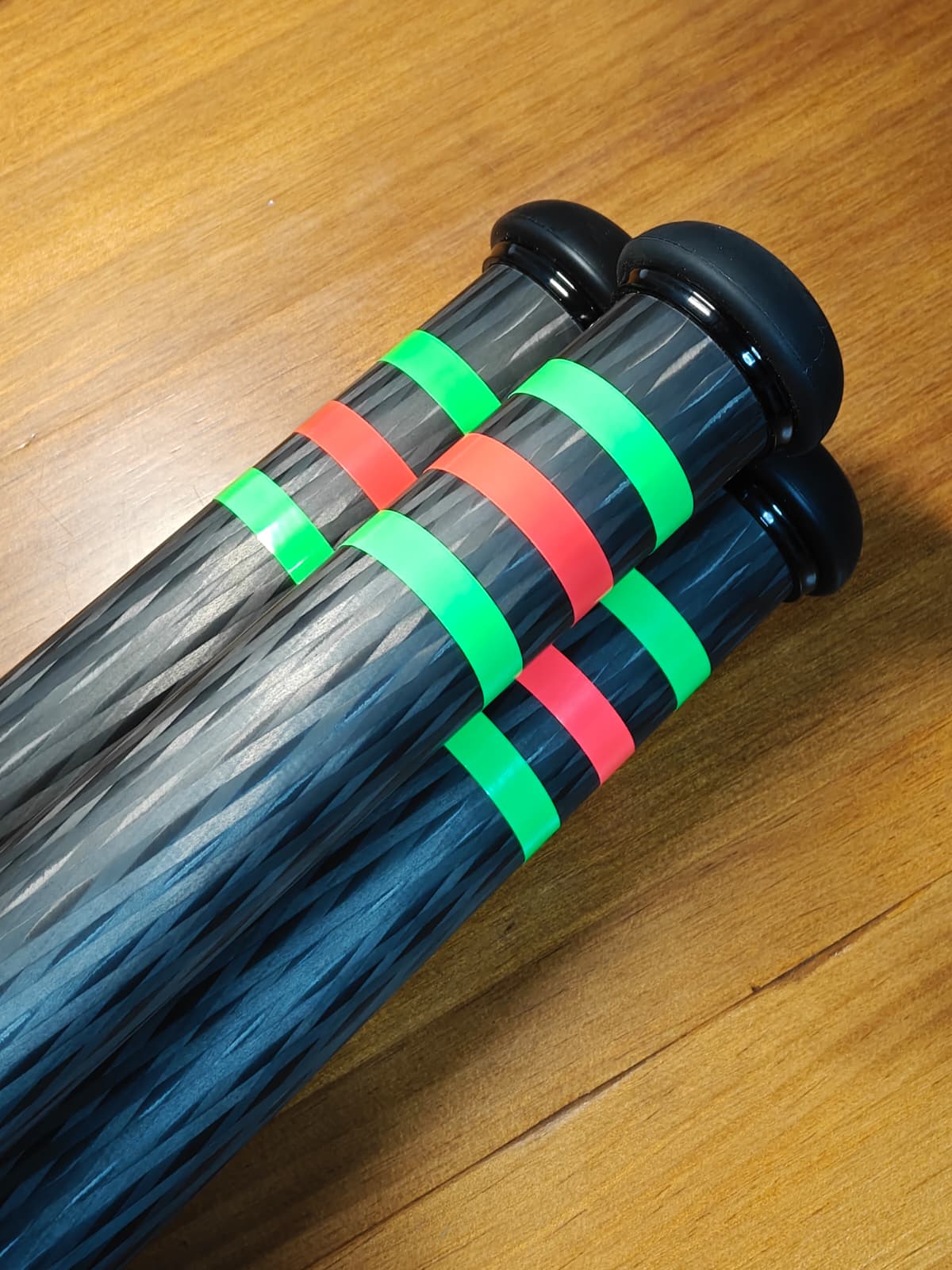
- Glow-in-the-Dark Leg Lock Indicators: A small detail, but having glow-in-the-dark indicators on the leg locks would make adjustments in complete darkness easier. Currently, I use a small piece of glow tape on each leg as a modification.
- Accessory Tray Option: Many astrophotographers would appreciate an optional accessory tray that mounts between the legs for holding batteries, lens caps, and other small items you need at hand during imaging sessions. The current design doesn’t offer this, though the 1/4″ mounts can be used for custom solutions.
These are truly minor points that don’t detract from the tripod’s excellent performance. They’re more “nice to have” features rather than real limitations. The core functionality – stability, load capacity, and reliability – is absolutely flawless.
16. Who Is This Tripod For?
Perfect For:
- Dual Camera System Users: If you run RGB/Ha dual camera setups, RGB/OIII combinations, or any multi-camera configuration on a single tracker, this tripod is absolutely essential. Systems weighing 8-10+ kg require this level of stability – there’s simply no lighter alternative that can handle these loads safely.
- Astrophotographers Using Star Trackers: Ideal for anyone using trackers like Fornax Lightrack II, iOptron SkyGuider Pro, Skywatcher Star Adventurer, Move Shoot Move, or similar devices. The stability, load capacity, and standard 3/8″ mounting make it perfect for tracked deep sky imaging.
- Long Focal Length Astrophotographers: If you’re imaging the night sky with the Sony 200-600mm G, Canon 100-400mm, or any telephoto lens from 200-600mm, whether tracked or untracked, the T4030CMI provides the stability needed for sharp results during long exposures.
- Serious Narrowband Imagers: For photographers capturing Halpha, OIII, SII and other narrowband targets that require hours of exposure time, the absolute stability and zero settling of this tripod means every frame counts.
- Multi-Target Imagers: The 66 lb capacity allows mounting complex rigs with guidescopes, multiple cameras, or heavy counterweight systems, making it ideal for those running sophisticated astrophotography setups.
- Professional and Advanced Amateur Astrophotographers: Anyone who has invested in quality cameras (Sony Alpha, Canon R-series, Nikon Z-series), professional lenses, and precision trackers. This tripod is worthy of professional equipment and delivers professional results.
May Not Be Ideal For:
- Casual Milky Way Snapshots: If you’re just taking single untracked shots of the Milky Way with a wide-angle lens, lighter tripods will serve you fine and be easier to carry on hikes.
- Ultralight Backpackers: If you’re counting every ounce for multi-day backpacking trips and only doing casual night photography, the 4.85 lb weight might be more than you want to carry. However, for dedicated night photography trips, it’s worth it.
- Budget-Conscious Beginners: If you’re just starting in astrophotography and haven’t yet invested in a tracker or telephoto lenses, you might want to start with a more affordable tripod and upgrade to the T4030CMI as your equipment grows.
- Travel-Only Photographers: If you never shoot with trackers or heavy equipment and prioritize minimum pack size above all else, more compact travel tripods might better suit your needs.
Bottom Line: If you own or plan to own a star tracker and want to do serious deep sky imaging with telephoto lenses, and especially if you’re considering or already running a dual-camera RGB/Ha system, the T4030CMI is one of the best tripod investments you can make. It’s the foundation that supports thousands of euros of other equipment – don’t compromise here. This is the tripod that finally lets you use your equipment to its full potential.
17. Final Conclusions: The Astrophotographer’s Tripod
After months of intensive use across dozens of night photography sessions, I can confidently say that the Sunwayfoto T4030CMI has become an indispensable part of my astrophotography kit. It’s not just a good tripod – it’s the tripod that finally solved all the stability challenges I’d been fighting with previous equipment.
What Makes It Special for Astrophotography
The inverted leg design isn’t just a novelty – it provides genuine, measurable benefits for tracked imaging. The low center of gravity means my Fornax Lightrack II operates at peak performance without fighting against tripod flex or instability. During 3-minute exposures with the Sony 200-600mm G at 400-600mm, I get consistently round stars with zero elongation or trailing – something I could never achieve with my previous tripods.
The 66 lb (30 kg) load capacity provides enormous peace of mind, especially with my dual camera RGB/Ha system. When you’re running two Sony Alpha bodies, narrowband filters, and the complete Fornax Lightrack II setup weighing 8-10 kg, you need a tripod that doesn’t just “handle” the weight – it needs to completely ignore it. The T4030CMI does exactly that. I’m using only about 30% of its capacity, which means zero flex, zero settling, and absolute confidence during all-night imaging sessions.
The standard 3/8″ mounting stud means I can use any quality ball head I want – no proprietary systems or expensive adapters needed. I paired mine with a professional equatorial wedge, and the combination is absolutely rock-solid. The solid connection means zero play or loosening during long imaging sessions – I’ve run 8-hour sessions with my 10 kg dual-camera system without needing to check or adjust anything.
Real Impact on Image Quality
Here’s what matters most: my images are sharper. Period. The difference between tracked images taken on my previous tripod versus the T4030CMI is immediately visible. Stars are rounder, nebula details are crisper, and I can push to longer focal lengths with confidence. When you’re investing hours into a single image with dozens or hundreds of sub-exposures, having every single frame be perfectly sharp makes an enormous difference in the final result.
The Practical Benefits
Beyond pure image quality, the T4030CMI makes night photography more enjoyable. Setup is faster (the auto-deploying legs are surprisingly useful in darkness), adjustments are more intuitive, and I spend less time fighting with equipment and more time imaging. The carbon fiber construction stays comfortable to touch even on freezing winter nights when metal tripods become painfully cold.
After multiple night sessions in dewy conditions, with temperatures dropping from 20°C at sunset to 2°C at dawn, the tripod shows zero degradation. No corrosion, no stiff locks, no issues whatsoever. This is equipment built for serious, long-term use.
Value Assessment
At $559, the T4030CMI costs less than many photographers spend on a single lens filter or a decent intervalometer. Yet it impacts image quality more than many accessories costing twice as much. When you consider that many astrophotographers are using $2,000+ cameras, $1,500+ lenses, and $500+ star trackers, spending $559 on a tripod that can properly support all that equipment isn’t just reasonable – it’s essential.
I’ve used other premium tripods costing $1,000+. The T4030CMI matches their stability and build quality while costing nearly half as much. The inverted leg design actually gives it some advantages in certain scenarios. It’s not just “good for the price” – it’s genuinely excellent at any price.
Final Recommendation
If you’re serious about astrophotography with star trackers, if you shoot with telephoto lenses at night, if you want your images to be as sharp as your equipment is capable of producing – buy this tripod. Don’t compromise on your foundation. The T4030CMI will support your current equipment flawlessly and won’t become a bottleneck as you upgrade your imaging gear.
This isn’t just another tripod review where I say “it’s pretty good.” I’m saying this: the T4030CMI has genuinely improved my astrophotography results and I´m more confident about my setup. My workflow is faster and my equipment is better supported. That’s worth every penny.
Ready to take your astrophotography to the next level? Click HERE to visit the Sunwayfoto store. I highly recommend getting one of the ball head bundles if you don’t already have a quality ball head – you’ll save money and have a complete system ready for imaging. Don’t forget to use code JMPINCE1993 for a 5% discount on your entire order.
Clear skies and sharp stars!